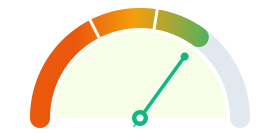
Self-esteem gauge from 10 to 40 points
Rosenberg Scale · 10 items

Self-Esteem Test: Rosenberg Scale

Sometimes you judge yourself more harshly than anyone else would. This test shows how you generally feel about yourself and compares your score with people your age.

10 statements•2 minutes•Ages 12+•Instant result
  • Free, instant result
  • Validated method: Rosenberg Self-Esteem Scale (Rosenberg, 1965)

What is self-esteem?

Self-esteem reflects how a person generally feels about themselves: whether they see themselves as worthy of respect and like who they are. It is not a grade for school or work achievements, but an inner sense of self-worth. That is what the Rosenberg Scale measures.

What you will see after the test

Total score. Your position on the 10–40 scale and level for your age group.
Peer comparison. The average score for your age group and the middle 50% range.
Two sides of self-esteem. How strongly you agree with kind statements about yourself versus harsh ones.
Tips and an exercise. Three practical steps and a short exercise matched to your level.

How to read your score

Each statement gives 1 to 4 points, so the total score ranges from 10 to 40. A higher score means a more positive attitude toward yourself. Because self-esteem shifts with age, each age group has its own benchmarks.

Hard on yourself

Your score is lower than three out of four peers your age.

Balanced self-regard

Your score is in line with most people your age.

Strong self-worth

Your score is higher than three out of four peers your age.

Benchmarks by age

  • 12–16 years: up to 20, 21–26, 27 and above
  • 17–21 years: up to 26, 27–29, 30 and above
  • 22 years and older: up to 27, 28–32, 33 and above

How to answer

Below is a list of statements dealing with your general feelings about yourself. Please indicate how strongly you agree or disagree with each statement.

  • Strongly agree
  • Agree
  • Disagree
  • Strongly disagree
  • Free, instant result
  • Validated method: Rosenberg Self-Esteem Scale (Rosenberg, 1965)

Frequently asked questions

Additional information about Rosenberg Self-Esteem Scale (RSES)

Authors of the method:
Morris Rosenberg (1965). Age-group benchmarks from the Ukrainian validation sample (Veldbrekht, Zinchenko, & Tavrovetska, 2025).
Scientific basis:
The Rosenberg Self-Esteem Scale (RSES) consists of 10 items rated on a 4-point Likert scale (total 10–40). Five items are positively worded and five are negatively worded (reverse-scored). Reference percentiles used for age bands come from a multi-wave sample of 537 participants aged 11–45 plus an adult sample of 187 participants aged 17–70 (Cronbach’s α = 0.88).
Limitations of the test:
This test is for self-reflection only and is not a clinical diagnosis. Age benchmarks reflect the reference sample and should be read as orientation rather than strict clinical cutoffs.
Medical disclaimer: This test is provided for educational and informational purposes only and does not replace professional medical or psychological advice, diagnosis or treatment. If you are experiencing serious distress, please contact a qualified professional.

Other tests you might find useful

  • Free, instant result
  • Validated method: Rosenberg Self-Esteem Scale (Rosenberg, 1965)